

An Alternative Business Disaggregation and Investment Model: The Dancer Behind the Agricultural Giants
- May 29
- 12 min read
In the world of investment and commerce, the names that always capture the most attention are those that are in the spotlight: Bayer, Cargill, CP Group, Syngenta… These agricultural giants dominate the headlines, and their brand values often run into the hundreds of billions of dollars. However, behind these “giants” moving steadily forward, there is a group of “invisible dancers” who are unknown to the general public but possess the core technologies, critical components, or essential raw materials that the giants cannot do without.
They do not compete with elephants; instead, they choose to dance alongside them.
This is not a retreat, but rather a state of utmost strategic clarity. They have abandoned the vanity premiums associated with end-brands in exchange for stable cash flows that persist through cycles. They do not seek to disrupt the industry with grand narratives; instead, they have built “toll booths” in a highly specialized field that even giants cannot ignore.
This article will take Indonesian biotechnology company Aquabloom as the central case study, and combine it with other classic examples from around the world, to provide a thorough analysis of this unique business model. It will reveal how these “invisible champions” identify their niche, build an irreplaceable moat, and maintain independence and long-term vitality in their interactions with giants.

I. The Dance of Positioning: From “Technological Obsession” to “Pain Point Matching”
The first step toward becoming a “silent powerhouse” is often accompanied by a profound transformation of oneself: abandoning one-sided displays of one’s own skills and instead focusing on providing precise responses to the genuine pain points of customers.
In explaining the company’s technological choices, Michelle Arsjad, CEO of Aquabloom, said a thought-provoking sentence: “There are theoretical conditions that are perfectly suited for aquaculture, but in reality, most people cannot achieve them. Water quality is deteriorating, the incidence of diseases is increasing, and there are weather changes to contend with. Under these extremely unfavorable circumstances, farmers face significant losses.”
This statement reveals a common misconception in the field of agricultural technology: many startups become so enamored with demonstrating the sophistication of their technology under ideal conditions that they overlook the complexities of the real world. What sets Aquabloom apart is that it has chosen a more “down-to-earth” approach to technology from the outset.
There are numerous solutions available for bacterial-related plant diseases in the market. However, the challenges lie in the sheer number of disease types, the complexity of their transmission mechanisms, and significant geographical variations. A solution that works in Thailand may be completely ineffective in Indonesia or Malaysia. In contrast, Aquabloom has opted for an immunomodulatory approach – a broad-spectrum, universal mechanism of action.
Farmers often face multiple types of disease pressures simultaneously, rather than a single issue. Immunomodulation strategies do not require precise identification of each pathogen; instead, they enhance the resilience of the farmed organisms. This approach directly addresses the most critical pain points in real-world scenarios.
Michelle offers a very insightful summary: “In the field of agricultural biotechnology, while ‘precision strikes’ may be appealing, ‘broad-spectrum enhancement’ is often more commercially practical. Farmers do not need a single miracle cure that can tackle only one type of pathogen; what they need is a solution that produces results under a variety of uncertain conditions and has a low entry barrier.”
This assessment had a direct impact on the product form and business strategy of Aquabloom. The immune-regulation strategy reduced the costs associated with validating the product across different regions and varieties, and also shortened the commercialization cycle. This was a crucial efficiency advantage for a startup with limited resources.
The choice of technical approach is, in essence, a projection of one’s depth of understanding of business scenarios.

II. The Dance of Paths: The Counterintuitive Strategy of “Hiding One’s Identity”
If the choice of technical approach reflects Aquabloom’s understanding of the industry, then its selection of market strategies demonstrates its clear awareness of its own situation.
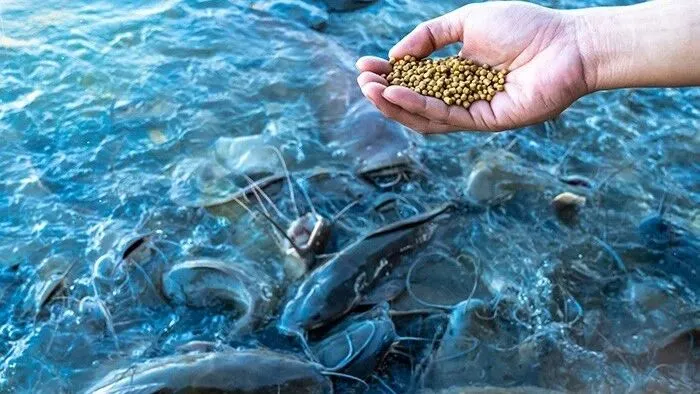
This is an “anti-intuitive” choice. Most startups strive to build their own brand, directly reach end-users, and achieve higher gross margins. Aquabloom, on the other hand, has chosen a path that is diametrically opposed: instead of establishing its own brand and selling directly to farmers, it opts to serve as an additive ingredient, integrated into existing feed products.
Michelle’s explanation was straightforward: “The feed industry in each country is dominated by a handful of large corporations. Partnering with established feed companies is more practical and easier to scale than establishing one’s own channels. For farmers, they prefer familiar supply chains and do not want the procurement process to become complicated.”
Behind this statement lies a harsh reality in the agricultural input industry: channel barriers are far more difficult to overcome than technical barriers. Farmers rely on the brands of feed they have used for ten or twenty years, rather than a new and unfamiliar biotechnology startup. If Aquabloom were to establish its own brand, it would need to invest enormous sums of money in market education, building a sales network, and fostering trust among farmers. This cost could easily surpass the investment in technological research and development.
More importantly, in the agricultural sector, “encouraging farmers to purchase an additional product” inherently implies significant transaction costs. Farmers’ procurement processes, warehousing management, and usage habits have all been shaped around the existing feed system. Requiring them to purchase an additional standalone product essentially increases their cognitive burden and operational complexity.
By integrating the additives into existing feed, farmers do not need to change any of their practices to reap the benefits of the product – “reducing mortality rates” becomes an implicit selling point, seamlessly integrated into the supply chain they are already familiar with.
Under this approach, Aquabloom has abandoned terminal premiums in exchange for two more valuable assets: scale and certainty. By partnering with feed giants, it can leverage existing channel networks and customer trust to rapidly achieve scalability. For additives, the feed companies themselves are the largest “channels.” If a product can provide a unique selling point for feed companies (such as “feed that reduces mortality rates”), there is motivation for feed companies to incorporate it into formulations and actively promote it.
The best product experience is one where the user hardly notices its presence; all they feel is the change in the outcome.

III. The Dance of Costs: A Survival Algorithm with Low Profit Margins and High Turnover
Dancing with an elephant inevitably means accepting the reality that your profit margins will be squeezed. The case of Aquabloom clearly illustrates the cost logic behind this model.
Michelle candidly admitted that the profit margins for feed additives are inherently lower than those for biostimulants. Seaweed-based ingredients require cultivation costs, and the extraction process also demands investment. Currently, similar products on the market employ either extremely crude extraction methods or none at all. To produce truly effective and stable products, the costs are substantial.
If we were to start from scratch and build our own brand’s distribution channels, conduct market education, and establish trust with farmers, it would be a significant additional expense. By partnering with a leading feed company, Aquabloom can save on these costs and focus its limited resources on two core areas: technological research and development, and production optimization.
This represents a path characterized by “low profit margins but high turnover and low risk.” Essentially, it involves spreading fixed costs (research and development, production facilities) across as large a volume of production as possible, while simultaneously minimizing sales and marketing expenses within the variable costs. In the realm of agricultural inputs, this model is often more sustainable than the high-profile brand strategy—especially given the already modest overall industry profit margins.
Interestingly, this model also possesses a hidden advantage: customer loyalty is significantly higher than in the retail model. Once Aquabloom’s additives are integrated into the formulations of major feed companies, switching suppliers becomes extremely costly due to the stability requirements for animal growth data.
Feed companies do not readily adjust formulations that have already proven effective, which means that Aquabloom’s cash flow is highly predictable. This starkly contrasts with the scenario in the retail market, where consumers can suddenly “switch sides.”
In any case, high profit margins do not necessarily translate to high returns. Slow turnover is the real killer of profits.
IV. The Dance of Value: Balancing Upstream Raw Materials with Downstream Markets
The story of Aquabloom also has an aspect that is often overlooked: its seaweed ingredients come from seaweed farmers along the Indonesian coast, with approximately half of them being women from marginalized communities. The company currently collaborates with around 300 seaweed farmers, aiming to improve their livelihoods through stable procurement.
This raises a deeper issue concerning the industry’s supply chain. Indonesia is one of the world’s largest producers of seaweed, yet most seaweed farmers remain impoverished. This is due to their reliance on the product market, which is controlled by a small number of buyers who have the power to drive down prices. Additionally, rising sea water temperatures and extreme weather conditions caused by climate change have made seaweed farming itself increasingly risky.
This is a typical industry chain structure featuring “dispersed raw materials upstream and concentrated processing downstream.” Seaweed farmers lack bargaining power, while processors who possess extraction and formulation technologies occupy a high value position.
Aquabloom’s solution is to process seaweed into higher-value products (biostimulants, feed additives), thereby creating greater value for the upstream raw materials. However, there is a realistic contradiction here: Michelle admits that the profit margins for feed additives are actually lower than those for biostimulants. “To achieve results, seaweed cultivation requires significant investments, and the extraction methods also entail substantial costs.”
This contradiction highlights a central challenge of the “dancing with the elephant” model: how can one achieve profitability in a market with already low margins, while ensuring that upstream farmers receive fair incomes?
The answer lies in scale. When production reaches a sufficient level, fixed costs are spread out, and unit costs decrease, allowing for reasonable profits without compromising the interests of the upstream suppliers. This is why Aquabloom chose to partner with the feed industry giants – although this path sacrifices some of the unit profit, it has enabled rapid expansion in scale.
Scale is, in and of itself, a mechanism for value creation: greater production volumes imply stronger bargaining power upstream, lower unit production costs, and more room for investment in research and development.
In the agricultural industry chain, scale is not the goal but rather a prerequisite for achieving fair distribution across all stages of the value chain.

V. The Dance of Timing: Standing on the Right Side of the “Scissors Gap”
The timing of Aquabloom’s entry into the market is noteworthy. This is not merely the result of its own strategic choices, but also a testament to its position as a beneficiary of structural changes within the industry.
Globally, restrictions on the use of antibiotics in aquaculture and livestock farming are being tightened. The European Union has implemented strict policies to reduce antibiotic use, and the Chinese market is rapidly following suit. At the same time, the pressure from diseases caused by climate change is increasing. High temperatures, extreme weather conditions, and deteriorating water quality – all of these factors are exacerbating the stress response and the risk of disease outbreaks in farmed animals.
This “scissors gap” is creating a massive market void: livestock farmers are unable to use antibiotics as freely as they once could, yet they have no viable alternatives available.
Michelle pointed out an industry convention: “Many feed additives are essentially antibiotics disguised as additives. However, regulatory agencies will eventually improve their detection capabilities.” This means that products that exploit loopholes will gradually be phased out of the market, while those that are truly based on natural ingredients and have a clear mechanism of action will gain long-term competitiveness.
She defined it as “a clear and persistent issue.” This statement is crucial: Aquabloom is not betting on a fleeting market trend, but rather on the long-term structural contradictions in the aquaculture industry – rising disease pressure versus decreasing available tools. As long as this contradiction exists, the demand for novel, compliant, and effective feed additives will not disappear.
This “structural issue” is the ideal environment for companies that engage in dancing with elephants. Feed giants also face this conundrum: they need to provide solutions for their customers, but their own research and development capabilities are often focused on staple grains and core formulations rather than the specialized biotechnological field of additives.
This is the gap that companies like Aquabloom, which are “invisible powerhouses,” can exploit – not by competing with giants, but by providing them with capabilities that they would struggle to develop quickly on their own.
The optimal position to dance with an elephant is not beneath its feet, but rather within its blind spot.

VI. The Global Landscape: “Invisible Dancers” in Other Fields
Aquabloom is not an isolated case. Linli Share, a Chinese agrochemical company, is another illustrative example. In 2026, Linli Share signed a long-term supply contract worth 1.6 billion RMB with Bayer of Brazil, which would last for six years. In this arrangement, Linli functions as a “silent manufacturer” – its products do not appear under its own brand name in front of Brazilian farmers but are used as part of Bayer’s solutions.
For Bayer, Lifeng is an irreplaceable source of production capacity; for Lifeng, Bayer provides an irreplaceable guarantee of creditworthiness. This “long-term agreement” model enables Lifeng to maintain full production and sales even during economic downturns.
The Hunan Haili Group, on the other hand, has taken a more “aggressive” path. It possesses the necessary qualifications for producing phosgene, an essential component in the production of carbamate-type pesticides. Due to the public safety implications of phosgene, the state’s approval process for such qualifications is extremely stringent, making it virtually impossible to add new production capacity. Haili not only provides finished products but also serves as an indispensable supplier of intermediates for global agrochemical giants.
It lacks the cacophony of end-brand marketing, yet it holds the “key to the throat” of the industry’s supply chain. This “qualification-based moat” is more rigid than a technological moat – technology can be surpassed, but a license represents institutional monopoly.
The partnership between German Compo experts and China’s New Yangfeng demonstrates a more equitable form of “dancing together.” Compo experts contribute the brand reputation of German manufacturing and 70 years of technological expertise; New Yangfeng contributes localized super-capacity and a nationwide distribution network. In this collaboration, Compo’s brand operates “in the background” within New Yangfeng’s product matrix in China, yet both parties have gained growth resilience that goes beyond individual efforts.

VII. Revelation: How to Capture the Next "Invisible Powerhouse"?
Based on the above analysis, we can outline an investment framework for identifying and capturing such companies that "dance with elephants."
First, look for "structural problems" rather than "market fads." Aquabloom targets the widening gap between rising disease pressure and the restriction on antibiotics. This is a structural contradiction that will not disappear. The hallmarks of such problems are: inelastic demand, scarce supply, and immunity to economic cycles. Investing in such companies is essentially a "certainty" business — their growth doesn't depend on a blockbuster product or a chance market trend, but on a persistent, deepening industry pain point.
Second, focus on "switching costs" rather than "gross margins." Many investors are easily drawn to high gross margins, overlooking the other side of the coin: if switching costs are low, high margins will quickly attract competitors, compressing profits to a reasonable level. Aquabloom's true moat isn't the complexity of its technology; it's the prohibitively high cost for feed giants to replace it once it's incorporated into their formulations. This "lock-in effect" is more resistant to competition than any patent.
Third, seek out "neutrality that serves the entire industry." Aquabloom serves multiple feed giants simultaneously rather than being exclusively tied to one. This attribute of an "industry-wide common platform" is the core guarantee of its independence. If it were locked in exclusively by a single feed giant, it would not only lose other customers but also its bargaining power. Independence, in itself, is a moat.
Fourth, understand the phased strategy of "scale before profitability." Aquabloom is still at a laboratory scale, and its economic efficiency is still being optimized. At this stage, pursuing scale expansion is more important than chasing unit profits. Scale brings lower unit costs, stronger upstream bargaining power, and faster technological iteration. For such companies, investors should assess progress by the "rhythm of scale expansion" rather than "current profit margins."
Fifth, value the sustainability of "fairness across the industry chain." Aquabloom's case reminds us that a stable supply of upstream raw materials is also a risk point. If seaweed farmers cannot improve their livelihoods, the sustainability of the supply chain will be threatened. Truly excellent "invisible powerhouses" pursue their own profits while building a value distribution mechanism that benefits all links in the chain. This isn't charity — it's long-termism. An exploited upstream will ultimately backfire on the downstream through declining quality or supply disruptions.
This type of "invisible dancer" offers an alternative investment aesthetic: instead of chasing high-risk, disruptive innovation, embrace high-certainty, symbiotic growth.
Epilogue
In the ancient field of agriculture, longevity is often more important than rapid growth. Companies that dance with elephants understand this well. They have traded in the glory of being in the spotlight for the certainty of navigating through cycles. They do not seek to change the world with grand narratives; instead, they painstakingly build their own barriers on a specific, persistent pain point.
Aquabloom opted to become a supplier of additives for the feed industry’s giants, Limin shares chose to become a long-term contractor for Bayer, and Hunan Haili selected to become a supplier of intermediates for agrochemical giants. These choices may seem to involve giving up the prestige of a brand, but in reality, they have secured something far more valuable in the business world: stability, continuity, and irreplaceability.
They use technology or expertise as a stepping stone to gain access to the doors of agricultural giants, and then transform this business into a “rent collection model” through exceptional service, consistent quality, and irreplaceable conversion costs.
In the cacophony of the capital markets, these “invisible dancers” may never become the main subjects of headlines. However, for investors who are willing to delve deep into the lower levels of the industry chain and understand the true logic of value creation, they are precisely the most valuable targets to capture.


Comments