

Facing the Sea, Embracing the Warmth of Spring | A Long-Term Answer Emerging from the Fields of Johor
- Apr 11
- 5 min read
Guided by the direction of agricultural and food industry development in Southeast Asia, Zebrafish Capital has continued to advance its project footprint in Malaysia. Over the past period, we have participated in and supported a number of representative initiatives spanning aquaculture, sheep breeding, and new projects that combine industrial potential with broader social significance. These projects differ in focus and are at different stages of development, but they are connected by a common thread: sustained engagement in real operating environments, continued capability-building, and a commitment to allowing projects to be tested through execution and to accumulate value over time.
I. Red Tilapia and White Shrimp Projects:
A Verifiable Path for Farmer Empowerment
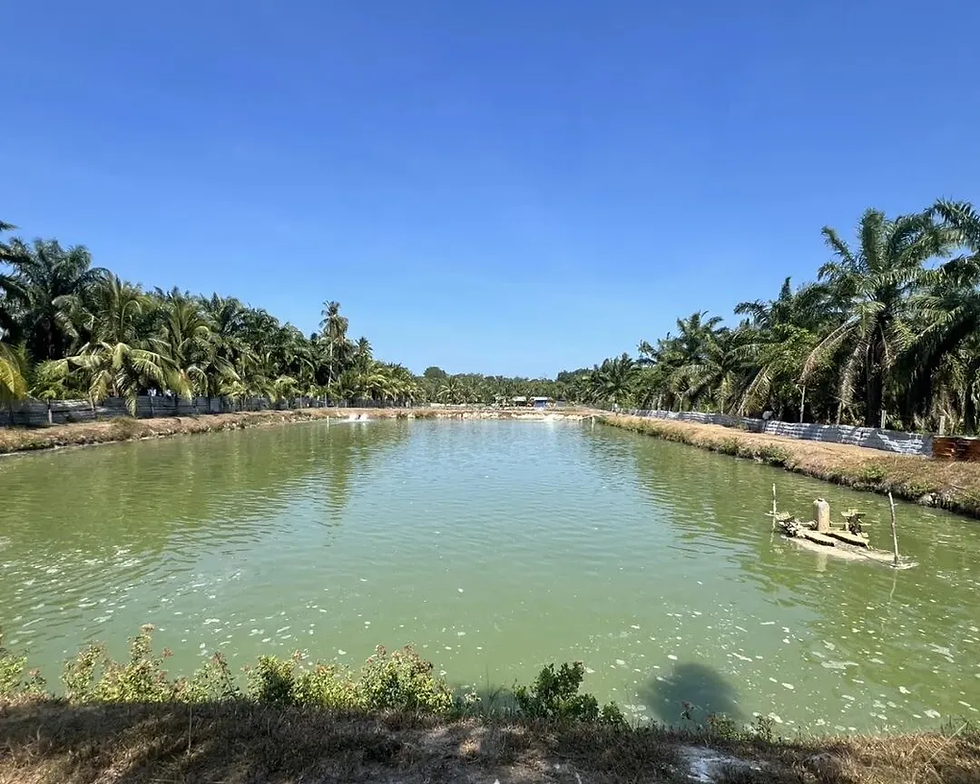
In Malaysia, Zebrafish Capital has participated in the development of red tilapia and white shrimp farming projects, both of which have achieved phased results. In the red tilapia project, the first batch of approximately 70,000 fish was successfully harvested and brought to market. These efforts not only demonstrated initial progress in farming management and execution, but also gave us more concrete experience in technology introduction, process optimization, partner coordination, and market linkage.
During project implementation, the team worked systematically with local partners on water quality management, fry selection, feed strategy, and daily farming operations. The value of these projects lies not only in their phased results, but also in the fact that they have validated a practical path that can be implemented, reviewed, and further extended. The value of an agricultural project is never limited to current output alone; it also depends on whether it helps frontline operators build capability and whether it can generate an operational model with the basis for replication. The red tilapia and white shrimp projects provide precisely such real-world examples.
II. The Aliyah Rizq Sheep Breeding Project:
A Project Model Growing Through Practice
In 2025, Zebrafish Capital formally participated in the first phase of investment in the Aliyah Rizq Sheep Breeding Project. Rooted in the local Malaysian context, the project explores sheep breeding, healthy livestock raising, and sustainable animal husbandry, while building on earlier practical experience to move toward a more organized operating model.
In advancing the project, Zebrafish Capital has focused not only on the investment itself, but also on whether the project can form real support at both the production and operating levels. By supporting sheep raising, complementary elephant grass cultivation, and market linkage for product sales, the project has gradually built a support chain from production through to market. The significance of this approach is that it does not stop at one-dimensional capital input; rather, it advances farming continuity, business viability, and income stability for farmers within the same framework.
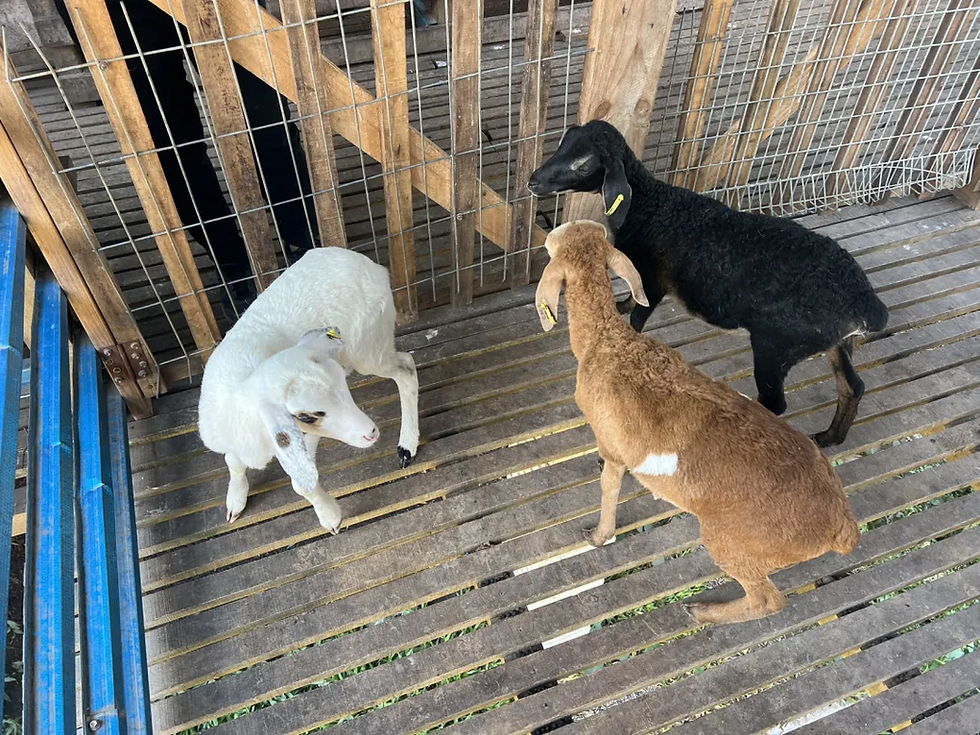
Recently, Zebrafish Capital CEO Henry Sim, together with the post-investment team, visited the project site. The first batch of lambing is progressing as planned. Based on on-site observations, the project has already established a relatively clear management framework and operating rhythm across key areas including biosecurity, husbandry protocols, and risk control.
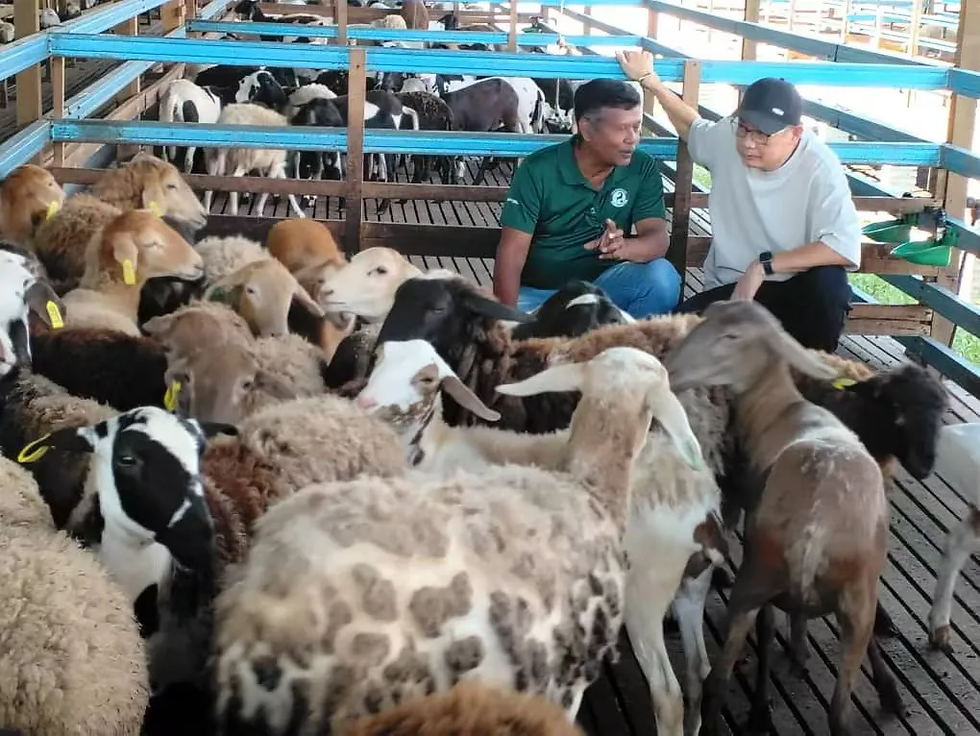
What makes the Aliyah Rizq Sheep Breeding Project worth close attention is not simply that it is an investment, but that it shows how a project can gradually establish standards, accumulate results, and grow into a more complete model through practice. Strong agricultural projects do not begin by scaling aggressively; they begin by building a solid foundation, proving the path, and allowing capability to develop steadily over time.

III. A New Johor Project:
A New Attempt That Integrates Industrial Logic with Social Value
While existing projects continue to move forward steadily, Zebrafish Capital is also advancing another new project in Johor, Malaysia. What makes this project worth noting is not only its real industrial potential and investment value, but also the way its model connects project operations with the growth of frontline participants.
In this project, Zebrafish Capital intends to contribute not only capital, but also technology input, production organization, procurement linkage, and incentive structure design. For frontline participants, this is not simply about being given a job; it is about becoming genuinely embedded in the production system. From how to plant, raise, and manage, to how daily processes are carried out, participants build more complete methods and capabilities through hands-on involvement.
At the same time, through procurement of the final products and performance-linked income arrangements, Zebrafish Capital aims to ensure that frontline participants not only receive current income, but also share in the longer-term returns generated through the project’s continued operation. For Zebrafish Capital, the greater value of projects like this lies not simply in making the business work, but in ensuring that as the project forms an industrial closed loop, the people within it can grow as well. That growth is reflected not only in improved income, but also in skills accumulation, greater job stability, and a stronger sense of future prospects.

IV. What These Projects Reveal About Zebrafish Capital’s Long-Term Approach
Taken together, these projects make it easier to see a clear thread running through Zebrafish Capital’s work in Malaysia.
First, we consistently start from real operating environments rather than remaining at the level of concepts. What matters is not how grand the narrative sounds, but whether a project can be validated, executed, and sustained in the local context.
Second, we emphasize long-term participation rather than one-off capital deployment. Agricultural projects are different from purely financial assets; their value does not materialize automatically at the moment an agreement is signed or funds are deployed. What truly determines the quality of a project is often the management, execution, observation, and adjustment that take place after operations begin.
Third, we remain focused on the replicability and long-term extensibility behind each individual project. Whether a project can endure depends not only on its current returns, but also on whether it produces methods that can be accumulated, experience that can be reused, and collaborative space that can be further extended.
In this sense, long-termism is not a slogan. It is a concrete judgment embedded in the project itself. What matters is not simply which projects we enter, but whether those projects can be executed well and sustained over time.

V. Allowing Projects to Accumulate Value Over Time
Looking back on these initiatives, what deserves attention is not merely which sectors we entered or which projects we participated in. More importantly, they continue to validate one thing: the value of agricultural investment is not realized in short-term payoff, but gradually formed through long-term participation.
Whether it is the red tilapia project, the sheep breeding project, or the new initiative in Johor, all of them point to the same conclusion: projects worth committing to should have both sound industrial logic in the present and the capacity for growth over the long term; they should be able not only to generate investment returns, but also to create broader and more durable value.
Going forward, Zebrafish Capital will continue to use Singapore as its base to connect Southeast Asia, China, and broader markets, focusing on agricultural and food projects that can take root in real operating environments, grow through long-term execution, and unlock greater potential through cross-regional collaboration. Rather than chase short-term momentum, we would rather take a longer view and do the deeper work, so that every project worth backing can accumulate its true value over time.


Comments